


Howling Bells - Strange Life
- Carla Napolitano

- 17 feb
- Tempo di lettura: 6 min
“Strange Life”: Howling Bells’ nocturnal return through shadow, resilience and rebirth.
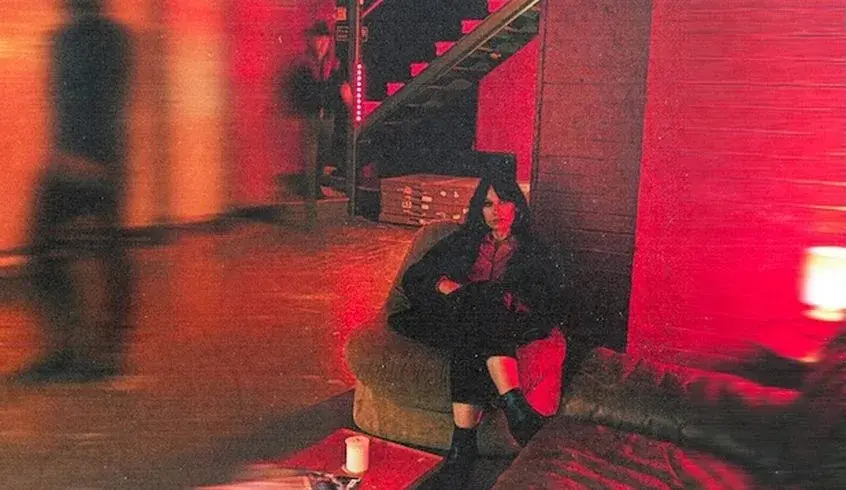
After more than twelve years of recording silence, Howling Bells return with an album that does not sound like a simple comeback but like a declaration of existence. Strange Life, released on February 13, 2026, feels like a record that moves through time rather than being shaped by it. It is not nostalgia, not revival. It is reclamation.
The Australian trio — Juanita Stein on vocals and guitar, her brother Joel Stein, and drummer Glenn Moule — reemerge with a different awareness, almost stripped of youthful urgency yet still charged with an electric tension that never truly faded. This is apparent from the very first listen.
Recorded with producer Ben Hillier, known for his ability to excavate the darker layers of an artist’s sound, Strange Life moves along a thin boundary between noir rock and psychedelia, between emotional density and sudden luminosity. Hillier does not polish the sound; he lets it breathe, roughens it, gives it dimensional weight. The guitars are sharp but never overstated, the drums pulse with almost visceral precision, and Juanita Stein’s voice — magnetic, nocturnal, touched by an elegant melancholy — becomes the thread stitching the entire record together.
There is something deeply cinematic about this album. The atmospheres are dark yet not claustrophobic, as if each track were lit by an oblique light, the kind that falls on things when the day is about to end. This is rock that seeks not immediacy but resonance. It aims not for explosion but for sedimentation.

One of the key tracks, “Heavy Lifting,” may represent the emotional core of the record. It is not an anthem of shouted resilience but a reflection on the quiet labor of becoming. It speaks of invisible burdens, weights that cannot be seen yet shape both body and character. The lyrics avoid victimhood, presenting transformation as a slow, sometimes painful but necessary process. Musically, the song moves between tension and suspension, building toward a crescendo that never fully breaks, as if true strength lay in restraint rather than release.
In Strange Life, time is a subterranean but constant theme. Twelve years of absence are not merely biographical fact; they become narrative material. Distance, maturation, even scar tissue can be felt. These songs seem written by someone who has moved through loss, change, perhaps disillusionment — and chosen not to soften it. Yet there is no cynicism here. Rather, a form of adult clarity. The noir rock threading the album is not simply a dark aesthetic but an emotional lens. Minor harmonies, deep bass lines, and reverberations wrapping around the voice construct a sonic landscape that invites introspection. Meanwhile, the psychedelic element introduces unexpected openings, expansions, layers, moments in which the sound unfolds like an inner vision. It is here that the album breathes most freely, allowing itself to become almost contemplative.
What stands out is the balance between coherence and risk. Strange Life does not betray the identity of Howling Bells, yet it does not merely replicate it. It acknowledges its past without being imprisoned by it. In an era when many comebacks dissolve into nostalgia, this feels quietly radical.
Juanita Stein’s voice deserves particular attention. It is not merely an instrument but a narrative presence. Every word feels weighed, every inflection deliberate. There is a vulnerability that does not present itself theatrically but reveals itself in the folds. And precisely this restraint makes the emotion more powerful.
Strange Life is not an album for distracted listening. It requires time, attention, a certain emotional openness. It grows with each listen, settling slowly. It does not chase radio singles at all costs but builds a journey. A nocturnal journey, yes — but not a desperate one. Rather, a conscious passage through shadow.
The return of Howling Bells, then, is not just a discographic event but an artistic gesture about persistence. About that strange life made of pauses, silences, detours, and unexpected returns. Perhaps this is the album’s deepest message: there is no straight line in growth, neither in music nor in existence. There are cycles, fractures, resumptions.
And when a record can transform all of this into sound, it is not merely a comeback. It is a rebirth.
IT
“Strange Life”: il ritorno notturno degli Howling Bells tra ombre, resilienza e rinascita.

Dopo oltre dodici anni di silenzio discografico, gli Howling Bells tornano con un album che non suona come un semplice ritorno ma come una dichiarazione di esistenza. Strange Life, uscito il 13 febbraio 2026, è un disco che sembra attraversare il tempo invece di subirlo. Non è nostalgia, non è revival. È una riconquista.
Il trio australiano — Juanita Stein alla voce e chitarra, suo fratello Joel Stein e il batterista Glenn Moule — riemerge con una consapevolezza diversa, quasi spogliata dalle urgenze della giovinezza ma ancora attraversata da una tensione elettrica che non si è mai davvero spenta. E questo si percepisce fin dal primo ascolto.
Registrato con il produttore Ben Hillier, noto per la sua capacità di scavare nelle zone d’ombra del suono, Strange Life si muove su un confine sottile tra rock noir e psichedelia, tra densità emotiva e improvvise aperture luminose. Hillier non leviga il suono: lo lascia respirare, lo rende ruvido, tridimensionale. Le chitarre sono taglienti ma mai urlate, la batteria pulsa con una precisione quasi viscerale, e la voce di Juanita Stein — magnetica, notturna, attraversata da una malinconia elegante — diventa il filo che tiene insieme l’intero album.
C’è qualcosa di profondamente cinematografico in questo disco. Le atmosfere sono scure ma non claustrofobiche, come se ogni brano fosse illuminato da una luce obliqua, quella che cade sulle cose quando il giorno sta per finire. È un rock che non cerca l’immediatezza ma la risonanza. Non punta all’esplosione ma alla sedimentazione.
Uno dei brani chiave, “Heavy Lifting”, rappresenta probabilmente il cuore emotivo del disco. Non è un inno alla resilienza gridata ma una riflessione sulla fatica silenziosa del diventare. Parla di carichi invisibili, di pesi che non si vedono ma modellano il corpo e il carattere. Il testo evita il vittimismo e racconta la trasformazione come un processo lento, a volte doloroso ma necessario. Musicalmente alterna tensione e sospensione, costruendo un crescendo che non esplode mai del tutto, come se la vera forza stesse nel trattenere, non nello sfogare.
In Strange Life il tempo è un tema sotterraneo ma costante. Dodici anni di assenza non sono solo un dato biografico: diventano materia narrativa. Si avvertono distanza, maturazione, cicatrici. Le canzoni sembrano scritte da chi ha attraversato perdite, cambiamenti, forse anche disillusioni, e ha scelto di non addolcirle. Senza cinismo, però — piuttosto con una lucidità adulta.
Il rock noir che attraversa l’album non è semplice estetica dark ma una lente emotiva. Armonie minori, linee di basso profonde e riverberi che avvolgono la voce costruiscono un paesaggio sonoro che invita all’introspezione. La componente psichedelica introduce invece aperture inattese: dilatazioni, stratificazioni, momenti in cui il suono si espande come una visione interiore. È lì che il disco respira di più, permettendosi di diventare quasi contemplativo.
Colpisce l’equilibrio tra coerenza e rischio. Strange Life non tradisce l’identità degli Howling Bells ma non si limita a replicarla. Riconosce il proprio passato senza esserne prigioniero. In un’epoca in cui molti ritorni si consumano nell’effetto nostalgia, questa scelta appare silenziosamente controcorrente.
La voce di Juanita Stein merita una riflessione a parte. Non è solo uno strumento ma una presenza narrativa. Ogni parola sembra pesata, ogni inflessione calibrata. C’è una vulnerabilità che non si espone teatralmente ma si lascia intuire nelle pieghe. Ed è proprio questa misura a rendere l’emozione più intensa.
Strange Life non è un album da ascoltare distrattamente. Richiede tempo, attenzione, una certa disponibilità emotiva. Cresce ascolto dopo ascolto, si deposita lentamente. Non insegue il singolo radiofonico ma costruisce un percorso. Un viaggio notturno, sì — ma non disperato. Piuttosto un attraversamento consapevole delle ombre.
Il ritorno degli Howling Bells, quindi, non è soltanto un evento discografico ma un gesto artistico che parla di persistenza. Di quella “strange life” fatta di pause, silenzi, deviazioni e ritorni inattesi. Forse è proprio questo il messaggio più profondo del disco: non esiste una linea retta nella crescita, né nella musica né nell’esistenza. Ci sono cicli, fratture, riprese.
E quando un album riesce a trasformare tutto questo in suono, allora non è solo un ritorno. È una rinascita.
Commenti