


Brunetto: “Freedom Is Still My Favorite Word”

His journey moves across decades of electronic music, hybrid cultures, and languages that do not seek belonging, but resonance.

A beatmaker before being a composer, a listener before an author, Brunetto works through stratification - of time, media, and accumulated listening. His practice unfolds as an ongoing dialogue: with machines, with memory and other artists. In Ooparts, this approach finds an open and fluid synthesis, deliberately misaligned with the present moment, resisting fixed coordinates and linear narratives.
Hello and welcome. Your titles evoke a world that’s half-organic, half-digital. What kind of consciousness do you think lives inside your music?
I'm very honored to be here debating with you. Thank you for giving me the opportunity. Certainly a slightly eccentric conscience, comfortable with chiaroscuro, mid tempo beats (110 BPM) and definitely eclectic in nature.
I have always tried to diversify my proposal, combining analog textures (especially synthesizers, but also when practicing the art of sampling) with digital recording techniques and, why not say it, having fun creating rhythmic bases. I may like melodic forms (without driving myself crazy), also textures and rehearsing with vocals, but above all I consider myself a beatmaker, even more than the usual composer.
You’ve spent years amplifying the voices of other artists as a press officer. Has that act of listening to others changed the way you listen to yourself?
That 's damn right! And well, although at first -back in 2007 when I started in Decoder Muzique- I felt a bit out of place, strange, over the years it has become my main source of stability. Of calm, especially living in a city as demanding as Barcelona. Everything was much calmer before when residing in the South of Spain…
Absolutely. Spending years amplifying other artists’ voices has deeply shaped the way I listen and value myself. When you dedicate so much time to understanding others’ creative processes, struggles, and intentions, you naturally start reflecting on your own. I’ve learned to be more patient and curious. As well as treat my own creative thoughts with the same empathy and attention I give to others.
It is true that I don't always have the same amount of time and I tend to give priority to those other projects, before my own. Time will tell if it's a mistake, or simply professional behavior. But I repeat, now I'm more patient and I also empathize with most of my colleagues, both musicians and journalists.

The idea of “Ooparts” — objects that exist out of their time — feels like a metaphor for your sound. Do you ever feel like you’re creating music that doesn’t belong to the present?
You nail it! I also do feel that my music exists outside of a specific moment, but not because it “doesn’t belong” to the present. If anything, I see it as part of a continuum. I’m naturally curious, and that curiosity makes me treat sound as something that can travel freely between eras, techniques, and music shapes. For me, the past, present, and future can coexist without conflict. So when I create, I’m not trying to recreate a specific time period or fit into a current trend — I’m exploring how different sonic histories can meet and resonate in a single place.
In particular, on this occasion, the mini-album ‘Ooparts’, I also set myself the challenge of bringing together very different cultures in a single track. For example, in 'Blade Rana' Senegalese, Jamaican, and Italian influences coexist.
The title ‘Ooparts’ is also a tribute to my passion for science fiction and everything surprising but still unknown.
Ooparts moves between trip hop, dub, and abstract electronica without ever settling. Is this fluidity a rebellion against definition, or a way of finding freedom through movement?
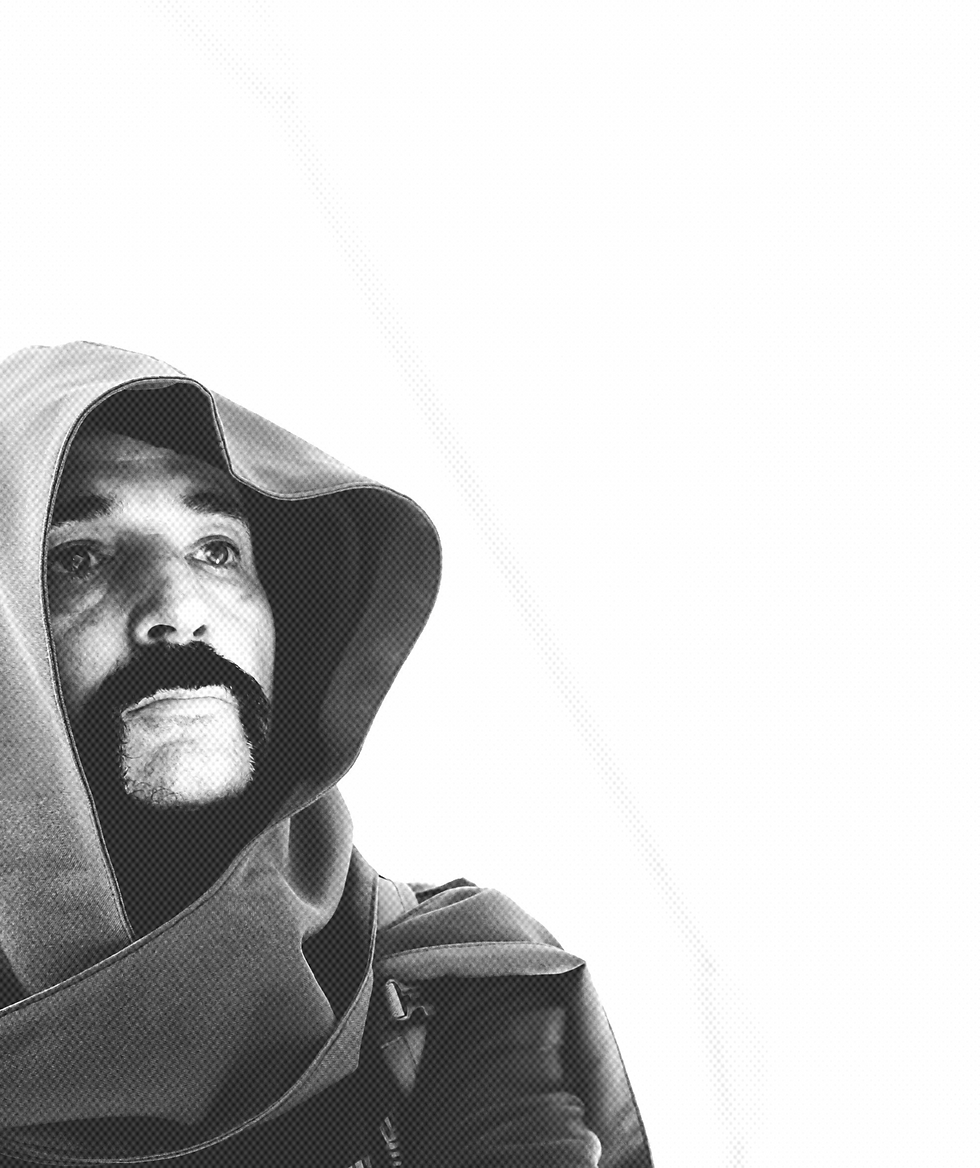
Look at my face, I'm happy because I'm really enjoying your questions. I truly appreciate it. I'm not usually controversial; I like rebellions, but I don't think this is the case here. It's more a question of freedom. It's still one of my favorite words: I shout for freedom!
Since I was a child I have grown up listening to many styles of music, even with variations within the same genre (as is the case with hip hop). During the nineties I felt the greatest satisfaction of my existence experiencing the evolution and recreation of electronic beats and sounds with different speeds (Techno, Ambient, Breaks, Jungle) and how successfully they made crossovers with guitars, jazz, etc.
I still feel a strong connection to the charisma of that decade. And more specifically, to the virtuosity of artists like Massive Attack, UNKLE, The Chemical Brothers, Renegade Soundwave, Meat Beat Manifesto or Fluke.
How do you balance instinct and architecture in your process, the raw emotion of improvisation versus the precision of production?
I tend to be very spontaneous. Sometimes, even too much so. On a personal level as well, for better and for worse. I generally like it this way when I produce music. If it's without pressure, even better. Normally, at specific times when I feel relaxed and comfortable, I start tinkering with drum machines, samples, and one or two synths. I create basic structures that I then let rest.
After some time, with a clear mind, I picked it all up again. A good sign is when I feel comfy, when things flow so well that I'm even able to jam then shape and finish a project in less than a week. Or even a day! I think I get some extra personality by acting this way.
Having lived through the evolution of electronic music across decades, what part of that journey do you feel humanity has lost and what part has finally awakened?
Well, I'm going back to 'locking myself away' in the 90s where the spirit surrounding music, at least the music that interested me and there was a lot of it, was quite catalytic, rebellious and unbound. I remember raves and clubs as spaces of unity and cultural resistance. Music labels and artists took more risks regardless of the fall.Times where people gathered for the music, not for social media. Too much mobile and superficial spectacle right now, I think.
And in connection with the previous question: we lost the magic of imperfection — the rough textures that made early electronic music feel human. Much of the art turned into a product. The message became secondary to the market. Technology has awakened the creative potential in millions of people who now have a voice through sound, but in the wrong hands it’s also a weapon that assists more creative poverty and too much saturation of releases. And it's best not to talk, at least for now, about the meteoric rise of AI.
If Ooparts were not an album but a message in a bottle sent to the future, what truth would you hope it carries when someone finally finds it?
Creation doesn’t have to be perfect to be true.
I’d hope it carries the truth that beauty lives in diversity, and that electronic beats are still a form of harmony — a reminder that imperfection represents those so-called earthlings!
It's a shame they almost became extinct, and there are very few left (laugh).
IT
Il suo percorso attraversa decenni di musica elettronica, culture ibride e linguaggi che non cercano appartenenza, ma risonanza.
Beatmaker prima che compositore, ascoltatore prima che autore, Brunetto lavora attraverso la stratificazione: del tempo, dei media e dell'ascolto accumulato. La sua pratica si svolge come un dialogo continuo: con le macchine, con la memoria, con altri artisti. In Ooparts, questo approccio trova una sintesi aperta e fluida, deliberatamente disallineata con il momento presente, resistendo alle coordinate fisse e alle narrazioni lineari.
Ciao e benvenuto. I tuoi titoli evocano un mondo a metà tra organico e digitale. Che tipo di coscienza pensi abiti la tua musica?
Sono molto onorato di essere qui a dialogare con te. Grazie per avermi dato questa opportunità. Direi una coscienza leggermente eccentrica, a suo agio con il chiaroscuro, con beat a medio tempo (110 BPM) e decisamente eclettica per natura.
Ho sempre cercato di diversificare la mia proposta, combinando texture analogiche — soprattutto sintetizzatori, ma anche attraverso la pratica del campionamento — con tecniche di registrazione digitale e, perché no, divertendomi a creare basi ritmiche. Mi piacciono le forme melodiche (senza ossessionarmi), le texture e anche sperimentare con le voci, ma soprattutto mi considero un beatmaker, ancora più che un compositore nel senso classico.
Hai passato anni ad amplificare la voce di altri artisti come addetto stampa. Questo atto di ascolto ha cambiato il modo in cui ascolti te stesso?
Assolutamente sì. Anche se all’inizio — nel 2007, quando ho iniziato con Decoder Muzique — mi sentivo un po’ fuori posto, quasi estraneo, col tempo è diventata la mia principale fonte di stabilità. Di calma, soprattutto vivendo in una città esigente come Barcellona. Quando vivevo nel sud della Spagna tutto era molto più tranquillo.
Passare anni ad amplificare la voce degli altri ha profondamente influenzato il modo in cui ascolto e valorizzo me stesso. Quando dedichi così tanto tempo a comprendere i processi creativi, le difficoltà e le intenzioni altrui, inizi inevitabilmente a riflettere anche sulle tue. Ho imparato a essere più paziente e curioso, e a trattare i miei pensieri creativi con la stessa empatia e attenzione che riservo agli altri.
È vero che non sempre ho lo stesso tempo per i miei progetti e che spesso do priorità a quelli altrui. Il tempo dirà se è un errore o semplicemente professionalità. Ma oggi sono più paziente e sento una forte empatia verso molti colleghi, musicisti e giornalisti.

L’idea di “Ooparts” — oggetti fuori dal loro tempo — sembra una metafora del tuo suono. Hai mai la sensazione di creare musica che non appartiene al presente?
Hai centrato il punto. Sento anche io che la mia musica esiste al di fuori di un momento preciso, ma non perché non appartenga al presente. La vedo piuttosto come parte di un continuum. Sono naturalmente curioso, e questa curiosità mi porta a trattare il suono come qualcosa che può viaggiare liberamente tra epoche, tecniche e forme musicali.
Per me passato, presente e futuro possono coesistere senza conflitto. Quando creo, non cerco di ricostruire un’epoca né di adattarmi a una tendenza: esploro come storie sonore diverse possano incontrarsi e risuonare nello stesso spazio.
In particolare, in questo mini-album Ooparts, mi sono posto la sfida di unire culture molto diverse all’interno di un singolo brano. In Blade Rana, ad esempio, convivono influenze senegalesi, giamaicane e italiane. Il titolo è anche un omaggio alla mia passione per la fantascienza e per tutto ciò che è sorprendente e ancora sconosciuto.
Ooparts si muove tra trip hop, dub ed elettronica astratta senza mai stabilizzarsi. È una ribellione contro le definizioni o una forma di libertà?
Sorrido perché mi sto davvero godendo le tue domande. Non sono una persona particolarmente controversa. Amo le ribellioni, ma in questo caso parlerei più di libertà. È ancora una delle mie parole preferite: io grido libertà.
Fin da bambino sono cresciuto ascoltando moltissimi stili musicali, anche con variazioni all’interno dello stesso genere, come nell’hip hop. Negli anni Novanta ho provato alcune delle più grandi soddisfazioni della mia vita, vivendo l’evoluzione dei beat elettronici — techno, ambient, breaks, jungle — e osservando come dialogassero con chitarre, jazz e altri linguaggi.
Sento ancora un legame fortissimo con il carisma di quel decennio, e in particolare con la virtuosità di artisti come Massive Attack, UNKLE, The Chemical Brothers, Renegade Soundwave, Meat Beat Manifesto o Fluke.
Come bilanci istinto e architettura nel tuo processo creativo, l’emozione grezza dell’improvvisazione e la precisione della produzione?
Tendo a essere molto spontaneo. A volte persino troppo, anche nella vita. Ed è così che mi piace lavorare anche nella musica. Se posso creare senza pressione, ancora meglio. Nei momenti in cui mi sento rilassato, inizio a smanettare con drum machine, campioni e uno o due synth, creando strutture di base che poi lascio riposare.
Dopo un po’, con la mente più lucida, riprendo tutto. Un buon segnale è quando mi sento completamente a mio agio, quando il flusso è così naturale da permettermi di jamare, modellare e chiudere un progetto in meno di una settimana — a volte persino in un solo giorno. Credo che questo modo di lavorare aggiunga personalità alla mia musica.
Avendo vissuto l’evoluzione della musica elettronica attraverso decenni, cosa pensi che l’umanità abbia perso e cosa invece si sia finalmente risvegliato?
Torno spesso con la mente agli anni Novanta, quando lo spirito che circondava la musica che mi interessava era catalizzatore, ribelle e libero. Ricordo rave e club come spazi di unità e resistenza culturale. Si andava per la musica, non per i social media. Oggi vedo troppo telefono e troppo spettacolo superficiale.
Abbiamo perso la magia dell’imperfezione — quelle texture grezze che rendevano l’elettronica profondamente umana. Molta arte è diventata un prodotto, e il messaggio è passato in secondo piano rispetto al mercato. La tecnologia ha risvegliato il potenziale creativo di milioni di persone, ma nelle mani sbagliate è anche uno strumento che alimenta saturazione e povertà creativa. E meglio non parlare, almeno per ora, dell’ascesa meteoritica dell’intelligenza artificiale.
Se Ooparts fosse un messaggio in bottiglia inviato al futuro, quale verità spereresti che portasse con sé?
Che la creazione non deve essere perfetta per essere vera.
Spero porti con sé l’idea che la bellezza vive nella diversità, e che i beat elettronici siano ancora una forma di armonia — un promemoria del fatto che l’imperfezione rappresenta quegli esseri chiamati “terrestri”.
È un peccato che siano quasi estinti… ne sono rimasti davvero pochissimi! (ride)
Commenti