


SLEBO: "Revolutionaries were great dreamers"

There is a point where the need for expression meets the urge to break away from established patterns.
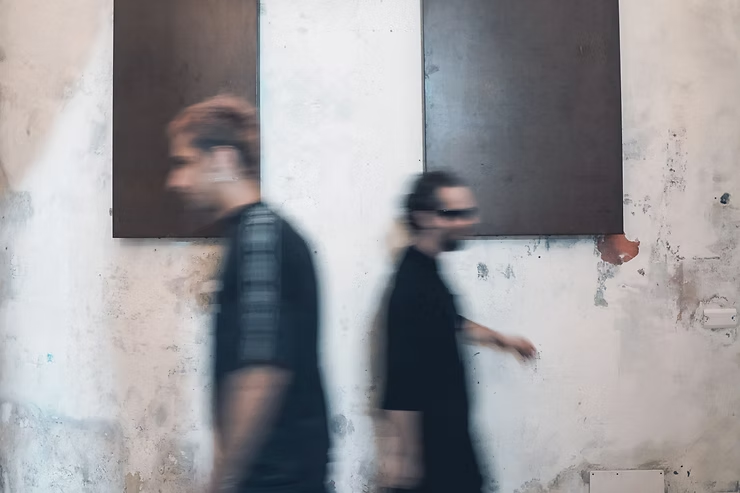
This is the space inhabited by SLEBO, a duo from Perugia blending electronic music, techno and post-punk into a direct, physical sound shaped by narrative tension. Their music moves between impulse and awareness, bringing to the surface the contradictions of a generation searching for new ways to express itself.
With Power Fantasia and its second chapter, SLEBO have begun to shape an artistic universe where the energy of the body meets the need to challenge the present. Now working on their debut album with producer Mattia Cominotto, the duo seems to be gradually shifting towards a more communicative dimension without abandoning the instinctive, visceral quality that defines their sound.
In this conversation with Moan Studios, we explore identity, alienation and authenticity, alongside the contradictions of the independent music scene and the possibility of imagining alternatives to the world we inhabit. Because fantasy is not necessarily an escape from reality: it can be the first step towards changing it.

Welcome. Your music brings together the physical impact of techno, the urgency of post-punk and a more narrative, singer-songwriter dimension. What kind of relationship are you looking for between body and thought, between the instinct to let go and the need to give meaning to what we experience?
Hi, and thank you so much for the invitation. First of all, we're really happy that these influences come across to people listening to us. We strongly believe that, in order to truly let go, you need to know yourself and constantly question yourself. Without that awareness, there's no freedom, just indifference… apathy!
We let the energy flow and then try to interpret it. More often than not, these are forceful gestures that end in acts of release, like spitting.
With the next record we're working on, we've felt the need to give more space to the “narrative” side, as you put it. We feel the need to communicate and engage in a dialogue. The goal is to provoke something in the listener, for better or worse. If someone tells us to fuck off because of something we've said or an opinion we've expressed, that's fine by us.
Post-punk has often portrayed individuals in conflict with their own times, while techno has turned the body into a tool for collective expression. What draws you to these two languages? In bringing them together, are you looking for a form of disorder capable of challenging the structures and habits of the present?
Disorder has always been part of who we are. All sorts of things have happened to us on stage, and sometimes beautiful things have happened too.
We've always had this feeling that we don't want to submit to predefined rules, and we channel that attitude on stage as well as outside it.
Now, as we prepare for the album, we're trying to channel these energies more consciously, leaving less room to chance.
I think they're two different languages that nevertheless resemble each other, a bit like two dialects of the same language. We'd like these two languages to become a kind of call and response. Our generation feels betrayed by this era, and that should give rise to a desire to come together around a drive for redemption and conflict that we don't really perceive at the moment. Without a bit of healthy struggle, nothing can change.

We're constantly exposed to stimuli, images and expectations that influence how we perceive ourselves. How difficult is it to preserve your own identity in a world that seems to demand constant adaptation? Can music become a space in which we recover a sense of authenticity?
Music and art in general MUST be an authentic space, and we believe they still are.
It's absolutely true that the global market tends to smooth out differences more and more, trying to make people conform to a single standard. It's also true that most of us have adapted to this, as you said. We, however, believe that authenticity, at least in art, is a kind of ancestral need, something even the average listener can perceive. Posers piss everyone off!
Ultimately, human beings need to be able to adapt and evolve; the difficult part is preserving the essence of who you are. We're very clear about our own identity, while always trying to challenge ourselves at the same time.
Repetition is a fundamental component of both electronic music and everyday life: gestures, habits and behaviours that recur until they become automatic. When does repetition become a form of alienation, and when can it instead turn into a tool for liberation?
In our opinion, it depends on the goal. If you have an outcome in mind that excites you, a repetitive gesture can be almost liberating. Otherwise, it can become a painfully alienating experience.
The independent scene is often described through the rhetoric of freedom and authenticity, yet competition, expectations and established models exist within it too. How can you preserve your own vision without ending up reproducing the very dynamics you want to distance yourselves from?
I don't think a truly independent scene exists. Or rather, it does, but the alternative to the mainstream isn't as clear-cut as it was ten years ago, whether we're talking about themes, genres or sounds.
The main problem is this fucking race to become mainstream, which, sure, might help you achieve those highly coveted “numbers” and fill concert venues, but, as you said earlier, it destroys your identity and sometimes asks for your soul.
Honestly, we think all it takes is a little more courage and respect for what you create, both from artists themselves and from the people who work alongside them.
The title Power Fantasia seems to bring together two different dimensions: power and imagination, the ability to influence reality and the possibility of reinventing it. How important is it for you to imagine alternatives to the present? Can fantasy become a form of resistance when reality seems to narrow the field of possibilities?
For us, it's vital, not so much as a way to escape reality, but as a way to believe we can change it. Fantasy is one of the greatest and most beautiful forms of resistance. Revolutionaries were great dreamers!
Your new album, produced by Mattia Cominotto and expected in autumn 2026, could mark a new phase in the project's identity. Looking ahead, what territories do you still feel the need to explore, both musically and as human beings?
First of all, thank you for mentioning Mattia. We want to emphasise how important meeting him has been, both musically and personally, for this new phase. He's an exceptional producer, and we've also discovered that we have very similar tastes.
Musically, as mentioned earlier, the communicative side is increasingly taking precedence over the physical side, or what we call the “danceable” side. On a human level, we feel the need to create a space for genuine sharing, sometimes instinctive too, where the listener isn't just a spectator but an integral part of the collective experience we need so much.
We'd like to be one of those projects that fights loneliness and isolation. As someone greater than us once said: “No man is an island!”
IT
C'è un punto in cui il bisogno di esprimersi incontra quello di rompere gli schemi.

È in questo spazio che si muovono gli SLEBO, duo di Perugia che intreccia elettronica, techno e post-punk in un linguaggio diretto, fisico e attraversato da una tensione narrativa. La loro musica si muove tra impulso e consapevolezza, lasciando emergere le contraddizioni di una generazione in cerca di nuovi spazi di espressione.
Con Power Fantasia e il suo secondo capitolo, gli SLEBO hanno iniziato a delineare un immaginario in cui l'energia del corpo incontra il bisogno di mettere in discussione il presente. Ora, al lavoro sul loro primo album con il produttore Mattia Cominotto, il duo sembra spostare progressivamente il proprio baricentro verso una dimensione più comunicativa, senza rinunciare alla componente istintiva e viscerale che ne caratterizza il suono.
In questa conversazione con Moan Studios, parliamo di identità, alienazione e autenticità, ma anche delle contraddizioni della scena indipendente e della possibilità di immaginare alternative al mondo che abitiamo. Perché la fantasia non è necessariamente una fuga dalla realtà: può essere il primo passo per provare a cambiarla.
Benvenuti. Nella vostra musica convivono l'impatto fisico della techno, l'urgenza del post-punk e una dimensione più narrativa e cantautorale. Che rapporto cercate tra corpo e pensiero, tra l'istinto di lasciarsi andare e il bisogno di dare un significato a ciò che viviamo?
Ciao e grazie mille per l'invito. Prima di tutto, siamo molto contenti che queste influenze vengano percepite anche all'esterno. Crediamo fortemente che, per lasciarsi andare veramente, bisogna conoscersi e mettersi costantemente in discussione. Senza questa consapevolezza non c'è libertà, ma menefreghismo… ignavia!
Facciamo defluire le energie e poi cerchiamo di interpretarle. Il più delle volte sono gesti di veemenza che sfociano in liberazioni come gli sputi.
Nel prossimo lavoro a cui stiamo lavorando abbiamo sentito il bisogno di incentivare la parte «narrativa», come l'hai definita tu. Sentiamo il bisogno di comunicare, di confrontarci. L'obiettivo è stimolare l'ascoltatore, nel bene e nel male. Se qualcuno ci manderà a fanculo per qualche contenuto o opinione, per capirci, va bene.
Il post-punk ha spesso raccontato individui in conflitto con il proprio tempo, mentre la techno ha trasformato il corpo in uno strumento di espressione collettiva. Cosa vi interessa di questi due linguaggi? Nella loro combinazione cercate una forma di disordine capace di mettere in discussione le strutture e le abitudini del presente?
Il disordine è sempre stato parte di noi. Anche sul palco ci è successo di tutto e, a volte, sono successe anche cose belle.
C'è sempre stata quella sensazione di non voler sottostare a regole predefinite, e sfoghiamo questa attitudine sul palco come fuori.
Ora, in vista dell'album, stiamo cercando di veicolare queste energie in modo più consapevole, lasciando meno spazio al caso.
Credo siano due linguaggi diversi, ma che si somigliano, un po' come due dialetti della stessa lingua. A noi piacerebbe che questi due linguaggi potessero diventare una sorta di domanda e risposta tra loro. La nostra generazione si sente tradita da quest'epoca e da qui dovrebbe nascere il bisogno di unirsi in una voglia di riscatto e conflitto che, al momento, non percepiamo. Senza un po' di sana lotta, non si può cambiare.
Siamo continuamente esposti a stimoli, immagini e aspettative che influenzano il modo in cui percepiamo noi stessi. Quanto è difficile conservare una propria identità in un mondo che sembra chiederci di adattarci continuamente? La musica può diventare uno spazio in cui recuperare una forma di autenticità?
La musica e l'arte in generale DEVONO essere uno spazio autentico, e crediamo che lo siano ancora.
È verissimo che il mercato globale tende a levigare sempre più le differenze, cercando di omologare le persone a uno standard unico. È vero anche che la maggior parte di noi si è adattata a questo, come dici tu. Noi, però, siamo convinti che, almeno nell'arte, l'autenticità sia una sorta di esigenza ancestrale, percepibile anche dall'ascoltatore medio. I poser stanno sul cazzo a tutti!
In fondo, l'essere umano deve saper adattarsi ed evolversi; la difficoltà sta nel mantenere l'essenza di ciò che si è. Noi abbiamo ben chiara la nostra identità e, allo stesso tempo, cerchiamo sempre di metterci in gioco.
La ripetizione è una componente fondamentale tanto della musica elettronica quanto della vita quotidiana: gesti, abitudini e comportamenti che si riproducono fino a diventare automatici. Quando la ripetizione diventa una forma di alienazione e quando, invece, può trasformarsi in uno strumento di liberazione?
Dipende, a nostro parere, dall'obiettivo. Se hai in mente un finale che ti entusiasma, il gesto ripetitivo è quasi liberatorio; altrimenti, al contrario, può diventare un'alienazione straziante.
La scena indipendente viene spesso raccontata attraverso la retorica della libertà e dell'autenticità, ma anche al suo interno esistono competizione, aspettative e modelli da seguire. Come si può preservare una visione personale senza finire per riprodurre le stesse dinamiche da cui si vorrebbe prendere le distanze?
Non credo che esista una vera scena indipendente. O meglio, esiste, ma l'alternativa al mainstream non è così evidente come lo era fino a una decina di anni fa, sia per quanto riguarda le tematiche sia per i generi e i suoni.
Il problema principale è la rincorsa a 'sto cazzo di mainstream che, per carità, consentirà anche di fare questi tanto ambiti «numeri» e riempire i concerti, ma, come dicevi tu prima, distrugge l'identità e a volte ti chiede l'anima.
Sinceramente, pensiamo che servano solo un po' più di coraggio e di rispetto per quello che si crea, sia da parte degli artisti sia da parte delle figure che collaborano con loro.
Il titolo Power Fantasia sembra mettere in relazione due dimensioni diverse: il potere e l'immaginazione, la possibilità di incidere sulla realtà e quella di reinventarla. Quanto è importante, per voi, immaginare scenari alternativi al presente? La fantasia può diventare una forma di resistenza quando la realtà sembra restringere il campo delle possibilità?
Per noi è vitale, non tanto per fuggire dalla realtà quanto per credere di poterla cambiare. La fantasia è una delle più grandi e belle forme di resistenza. I rivoluzionari erano dei grandissimi sognatori!
Il vostro nuovo disco, prodotto da Mattia Cominotto e atteso per l'autunno 2026, può segnare una nuova fase nell'identità del progetto. Guardando al futuro degli SLEBO, quali territori sentite ancora il bisogno di esplorare, musicalmente e umanamente?
Prima di tutto, grazie per aver nominato Mattia. Ci teniamo a dire che il suo incontro è stato importantissimo, sia musicalmente sia umanamente, per questo nuovo processo. È un produttore eccezionale e abbiamo scoperto di avere anche gusti molto affini.
Musicalmente, come detto precedentemente, la parte comunicativa sta prendendo sempre più il sopravvento su quella fisica, o, come la definiamo noi, «ballereccia».
Questo perché, umanamente, sentiamo il bisogno di creare uno spazio di condivisione reale, a volte anche istintivo, in cui chi ascolta non sia solo spettatore, ma parte integrante di questa collettività di cui abbiamo tanto bisogno.
Ci piacerebbe essere una di quelle realtà che lottano contro la solitudine e l'isolamento. Come diceva qualcuno più forte di noi: «Nessuno è un'isola!»
Commenti